
UNDERSTANDING BALANCE IN THE BRAIN
"Your brain has an accelerator and a brake: glutamate and GABA. When they work together, you feel calm, focused, and present."
GLUTAMATE & GABA EXPLAINED
Your brain is an electrical network where billions of neurons constantly pass signals. To keep this traffic flowing smoothly, your body relies on two major neurotransmitters: glutamate and GABA. They act like a push-and-pull system that keeps your mind balanced.
GLUTAMATE THE ACCELARATOR
Glutamate is the most common excitatory neurotransmitter in the brain. Think of it as the “gas pedal.” It makes your neurons fire faster and stronger.
Role: vital for learning, memory, and processing new information.
When balanced: gives you mental sharpness and energy.
When too active: can feel like racing thoughts, restlessness, or overstimulation. Your brain doesn’t know how to slow down.
GABA THE BRAKE
On the other side is GABA (gamma-aminobutyric acid), the main inhibitory neurotransmitter. This is your “brake.” It tells neurons to slow down or stop firing.
Role: promotes relaxation, focus, and calmness.
When balanced: helps you stay clear-headed under stress and wind down when needed.
When too low: it may feel harder to relax, concentrate, or quiet your thoughts.
Glutamate and GABA are constantly working together. It’s all about keeping the right ratio. This delicate balance is part of why you can feel sharp and calm one day, and scattered or overwhelmed the next.
ADHD AND BRAIN BALANCE
Research suggests that people with ADHD may face challenges in keeping the balance between excitatory and inhibitory signals in the brain steady. In other words, the equilibrium between glutamate (the “accelerator”) and GABA (the “brake”).
Some studies have found that children with ADHD show lower GABA concentrations in motor regions of the brain compared to children without ADHD (JAMA Psychiatry).
Other research points to alterations in glutamate or combined glutamate–glutamine (Glx) levels in the prefrontal cortex and anterior cingulate cortex in people with ADHD (MDPI — Brain Sciences).
In adults with ADHD, both lower GABA and glutamate levels have been reported in fronto-striatal brain regions (MDPI — Brain Sciences).
The ratio between GABA and glutamate is increasingly viewed as a potential biomarker of attentional control, inhibition, and sensory processing challenges in ADHD (MDPI — Brain Sciences).
WHY THIS MATTERS
This possible imbalance may help explain why people with ADHD often experience:
Heightened sensitivity or overstimulation
Racing thoughts or difficulty “slowing down” mentally
Trouble maintaining focus for extended periods
That said, the precise causal role of glutamate and GABA in ADHD remains an active area of research. Findings can vary depending on age group, brain region, medication use, and even the techniques used to measure neurotransmitters.
NEURODIVERGENCE
For many neurodivergent brains (whether that means a diagnosis of Autism Spectrum Disorder (ASD), heightened sensory sensitivity, or simply experiencing the world more intensely) the balance between the excitatory messenger Glutamate and the calming GABA isn’t just a biochemical footnote. It’s one of the wires behind how the brain filters, responds to, and recovers from stimulation.
Studies show that in ASD and related traits, genetic variation in glutamate- and GABA-related genes is linked to symptom severity and structural brain differences. For example, aggregated variation in glutamate genes correlated with core autism scores, and expression of both glutamate and GABA genes mapped onto differences in cortical thickness across development. PMC
Other work using brain imaging found altered glutamate/GABA ratios in specific regions: one paper reported increased glutamate/GABA+ ratio in the right temporal lobe correlated with social-communication differences. PLOS+1
Animal research drives the “what if” further: in a mouse model of autism, a lowered glutamate/GABA ratio in prefrontal cortex was significantly associated with social behaviour deficits. BioMed Central
WHAT THIS TELLS US
The excitatory/inhibitory (E/I) balance is likely shifted in many neurodivergent brains — though not in one single “direction” for everyone.
The shift may relate to sensory processing, overload, attention regulation, social-interaction differences, and even how one’s nervous system “calms down.”
PRACTICAL WAYS TO SUPPORT BALANCE
There are several lifestyle strategies that can help manage mental pressure and overstimulation:
Sleep & rest: consistent, high-quality sleep gives your brain time to reset.
Movement: physical activity helps regulate neurotransmitters and energy levels.
Breathing & mindfulness: calming practices can naturally boost GABA activity.
Nutrition: balanced meals with enough protein, vitamins, and minerals support brain chemistry.
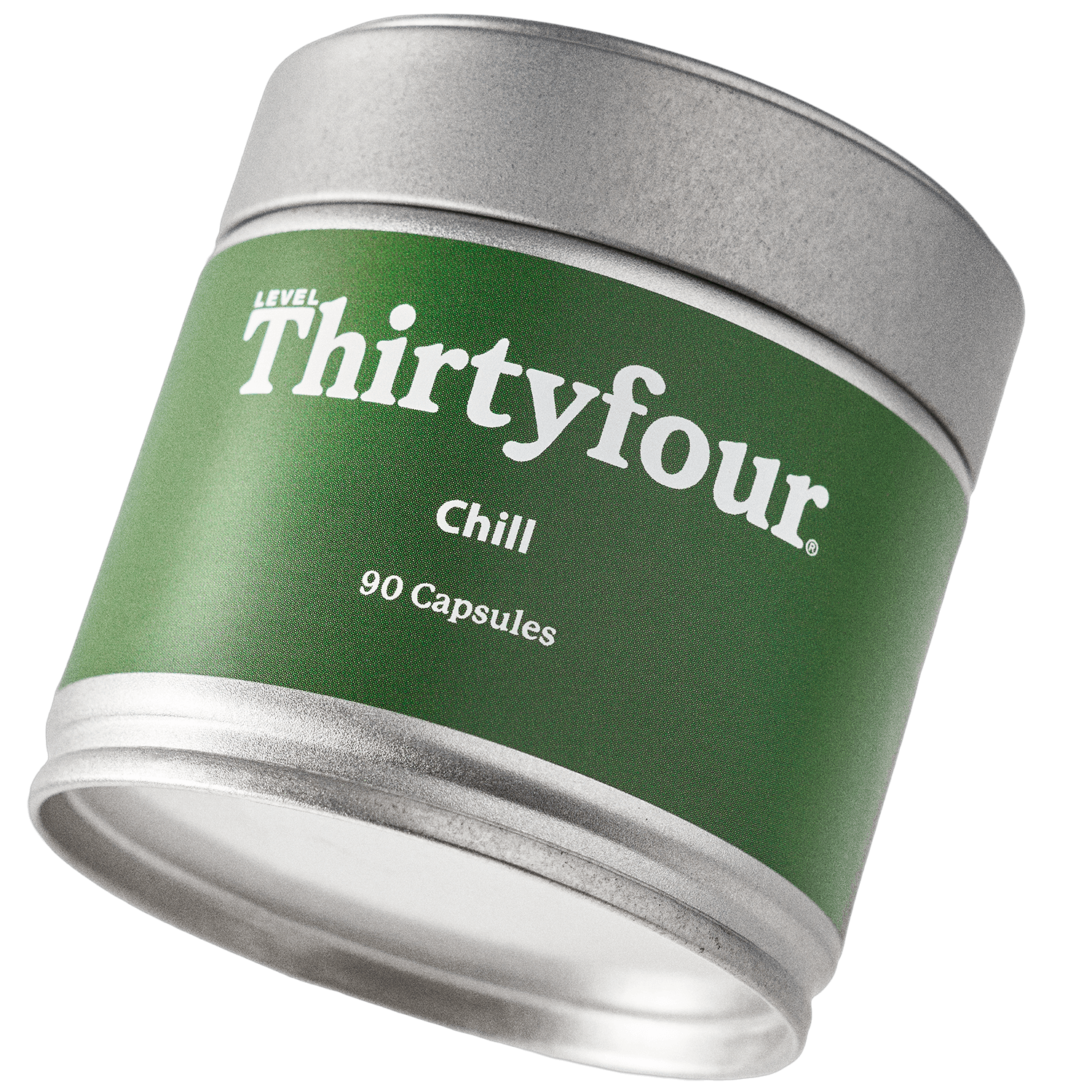
Chill

-
At the core of clear thinking and calm presence lies one word: balance.
Balance between activity and rest. Between focus and letting go. Between your brain’s accelerator (glutamate) and its brake (GABA).When that balance tips too far one way, life can feel like rushing traffic. Its noisy, overwhelming, and hard to navigate.
Chill was created to support that natural balance. With a blend of plant extracts and amino acids, it’s designed to help your mind stay centred.
-
Suggested use: Take 3 to 4 capsules daily, with or after a meal. For best results, keep these tips in mind:
Take with food, especially with a little bit of healthy fat
Compounds like safranal (from saffron) and apigenin are fat-soluble, meaning they absorb more efficiently when paired with a meal containing fats like avocado, nuts, olive oil, or eggs.Give it a calm setting
While L-theanine starts working within 30–60 minutes, pairing it with a screen break, walk, or quiet moment can help you tune in more clearly to the shift. Mind and setting work together.Be consistent
Compounds like rosmarinic acid (from lemon balm) and flavonoids (from passionflower) build subtle effects with regular use. Daily intake can help support a balanced baseline over time.Hydrate
Some actives, like L-theanine, work synergistically with hydration to support clarity and focus. Pair your dose with a glass of water to keep things flowing smoothly, literally and neurologically.Pair with Magnesium Glycinate and P5P
To get even more out of Chill, consider pairing it with magnesium glycinate and P5P (the active form of vitamin B6). These two nutrients support your nervous system. They also help each other with absorption and uptake.
This product supports but does not replace a healthy diet and lifestyle. Do not exceed the recommended daily dose. If you are pregnant or breastfeeding, taking medication, have allergies, or are under medical supervision, consult your healthcare provider before use.
Discontinue use if sensitivity occurs and consult a healthcare provider. Store in a cool, dry place, away from sunlight and out of the reach of children. Container and lid edges may be sharp after opening.